濟南濟柴環能燃氣發電設備有限公司
—— 燃料發電設備及機組相關配套設備及配件 ——
—— 燃料發電設備及機組相關配套設備及配件 ——
 全國服務熱線:

全國服務熱線:
 濟南濟柴環能燃氣發電設備有限公司
聯系電話:羅總18653152416
服務熱線:0531-62325028
聯系地址:中國(山東)自由貿易試驗區濟南片區孫村街道經十東路33688號章錦綜合保稅區聯東U谷科創中心5號樓101
沼氣發電機組:跨周期智能優化,發電量提升 14.66%,破解北方低溫產沼瓶頸
Biogas generator set: cross cycle intelligent optimization, power generation increased by 14.66%, breaking the bottleneck of low-temperature biogas production in the north
讓沼氣發電更"智能":跨發酵周期優化技術增產沼氣,實現鄉村生物質能低碳發電
Making biogas power generation more "intelligent": cross fermentation cycle optimization technology to increase biogas production and achieve low-carbon and efficient rural biomass energy generation
1
one
研究背景本項目基于團隊承擔的江蘇省碳達峰碳中和科技創新專項資金(重大科技示范)項目開展相關研究,經項目現場實地考察發現,在我國北方地區,冬季低溫常常導致沼氣工程"休眠",夏季高溫又造成能源浪費。傳統方法難以應對全年溫差挑戰,現有增溫模式能耗高且缺乏精準量化。如何實現增溫能耗與發電產出平衡,讓沼氣發電系統"知冷知熱",成為提升生物質能利用效率的關鍵難題。
Research Background: This project is based on the Jiangsu Province Carbon Peak and Carbon Neutrality Science and Technology Innovation Special Fund (Major Science and Technology Demonstration) project undertaken by the team to conduct relevant research. Through on-site inspections of the project, it was found that in northern China, low temperatures in winter often lead to the "dormancy" of biogas projects, while high temperatures in summer cause energy waste. Traditional methods are difficult to cope with the challenge of annual temperature differences, and existing warming modes have high energy consumption and lack precise quantification. How to achieve the optimal balance between heating energy consumption and power generation output, and make the biogas power generation system "know the cold and know the heat", has become a key challenge to improve the efficiency of biomass energy utilization.
2
two
論文解決問題及意義本研究針對鄉村綜合能源系統面臨的低溫環境下沼氣產量嚴重受限,解決以下難題:1)增溫措施能耗與增產效益的動態關系難以量化。2)長期運行中環境溫度波動對沼氣發酵存在顯著影響。為此,本研究本文提出變溫影響下鄉村生物質能發電系統跨周期滾動優化運行方法。首先,建模生物質物料預處理、厭氧消化產沼、沼氣凈化與貯存、沼氣發電及余熱回收、增溫助產等環節,提出精準量化助產能耗與發電增量的鄉村生物質能產沼及發電優化模型;其次,考慮環境不確定性因素對厭氧消化產沼效率的影響,針對跨多個水力停留周期下的助增方式及運行變量難以決策的問題,提出一種跨周期的滾動優化運行方法,以最近一個水力停留周期為控制域,滾動時窗后移更新環境溫度、太陽輻射等變量數據,以年運行總發電量最大為目標,生成跨周期鄉村生物質能發電系統滾動優化運行方案。
This study aims to address the severe limitation of biogas production in low-temperature environments faced by rural integrated energy systems, and to solve the following challenges: 1) The dynamic relationship between energy consumption and yield benefits of warming measures is difficult to quantify. 2) The fluctuation of environmental temperature during long-term operation has a significant impact on biogas fermentation. Therefore, this study proposes a cross cycle rolling optimization operation method for rural biomass power generation systems under the influence of temperature changes. Firstly, accurately model the processes of biomass material pretreatment, anaerobic digestion biogas production, biogas purification and storage, biogas power generation and waste heat recovery, and warming assisted delivery, and propose a rural biomass biogas production and power generation optimization model that accurately quantifies the energy consumption and power generation increment of assisted delivery; Secondly, considering the impact of environmental uncertainty factors on anaerobic digestion and biogas production efficiency, a cross cycle rolling optimization operation method is proposed to address the problem of difficulty in decision-making on boosting methods and operating variables across multiple hydraulic retention cycles. The method uses the most recent hydraulic retention cycle as the control domain, updates variables such as environmental temperature and solar radiation with a rolling time window, and generates a rolling optimization operation plan for the cross cycle rural biomass energy generation system with the goal of maximizing the total annual power generation.
3
three
論文內容1)綜合考慮消化罐所受太陽輻射、余熱回收、罐體結構間熱傳導等多重熱傳遞,進行沼氣制備過程與發電環節耦合的精準建模,采用沼氣發電余熱回收設備與蓄熱式電鍋爐協同控制,形成靈活控溫的沼氣產出與發電綜合生產模式,實現增發電量與消耗能量的差值最大,有效提高輸出發電量。圖1 產沼率與溫度關系分段線性化2)針對鄉村生物質發電系統跨多個水力停留周期長時間運行所面臨的環境變化與不確定性因素,以厭氧消化水力停留周期為滾動步長,利用預測域內數據的更新對剩余時刻進行優化調度,實現變溫影響下的鄉村生物質能發電系統跨周期滾動優化運行。
Key content of the paper: 1) Taking into account multiple heat transfers such as solar radiation, waste heat recovery, and thermal conduction between tank structures, a precise modeling of the coupling between biogas preparation process and power generation is carried out. The biogas power generation waste heat recovery equipment is used in conjunction with a thermal storage electric boiler to form a flexible temperature control integrated production mode for biogas output and power generation, achieving the maximum difference between increased electricity generation and energy consumption, effectively improving the output power generation. Figure 1 shows the segmented linearization of the relationship between biogas production rate and temperature. 2) In response to the environmental changes and uncertainties faced by rural biomass power generation systems operating for long periods of time across multiple hydraulic retention cycles, the anaerobic digestion hydraulic retention cycle is used as the rolling step, and the remaining time is optimized and scheduled using data updates in the prediction domain to achieve cross cycle rolling optimization operation of rural biomass power generation systems under the influence of temperature changes.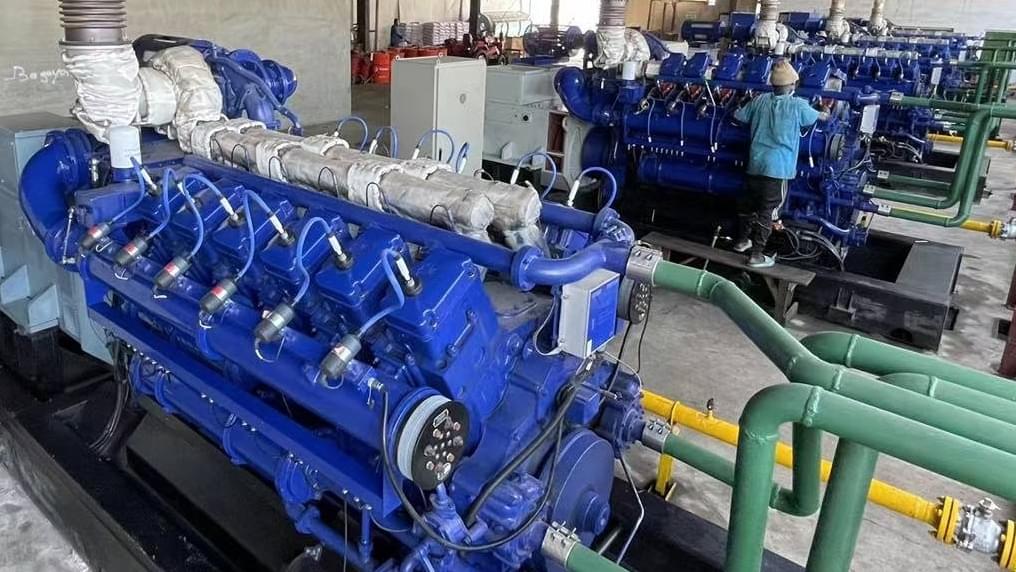
4
four
結論本文剖析鄉村生物質能發電系統工藝流程,建立鄉村生物質能產沼及發電優化綜合模型,探究不同運行方案對沼氣發電總量的影響,充分考慮環境變化及不確定性因素,探索節能的運行方式,以最大總輸出電量為目標,提出鄉村生物質能發電系統運行滾動優化方法。該方法應用于我國北方地區及其他寒冷地區的大型奶牛養殖農場能產生明顯效果,對于以其他生物質為物料的沼氣工程亦有一定參考作用。本文的核心貢獻如下:1)建立鄉村生物質能產沼及發電綜合優化模型,精準量化鄉村生物質的物料轉換及沼氣發電中的能量轉換與物質流動。2)能夠根據不斷更新的環境變化情況對設備出力進行滾動優化,使系統能更好地適應鄉村復雜場景下環境溫度、太陽輻射變化與不確定性。3)通過合理決策設備出力,使總電量產出與能耗的差值最大,生成全水力停留周期下鄉村生物質能發電系統運行方案,應用于年產沼量兩百萬立方米以上的大型奶牛牧場生物質發電系統能使全周期發電總量相較原始方法增大607.25MWh,提高14.66%以上。
Conclusion: This article analyzes the process flow of rural biomass energy power generation system, establishes a comprehensive model for rural biomass energy biogas production and power generation optimization, explores the impact of different operation schemes on the total amount of biogas power generation, fully considers environmental changes and uncertainty factors, explores efficient and energy-saving operation modes, and proposes a rolling optimization method for rural biomass energy power generation system operation with the goal of maximum total output electricity. This method can produce significant results when applied to large-scale dairy farms in northern and other cold regions of China, and also has certain reference value for biogas engineering using other biomass materials. The core contributions of this article are as follows: 1) Establishing a comprehensive optimization model for rural biomass energy production and power generation, accurately quantifying the material conversion of rural biomass and the energy conversion and material flow in biogas power generation. 2) Being able to roll optimize equipment output based on constantly updated environmental changes, enabling the system to better adapt to changes and uncertainties in environmental temperature and solar radiation in complex rural scenarios. 3) By making reasonable decisions on equipment output, the difference between total electricity output and energy consumption can be maximized, and a rural biomass power generation system operation plan under full hydraulic retention period can be generated. This plan can be applied to a large-scale dairy farm biomass power generation system with an annual biogas production of more than two million cubic meters, which can increase the total power generation of the entire period by 607.25 MWh compared to the original method, an increase of more than 14.66%.
本文由 沼氣發電機組 友情奉獻.更多有關的知識請點擊 http://m.kmy0823.com/ 真誠的態度.為您提供為的服務.更多有關的知識我們將會陸續向大家奉獻.敬請期待.
This article is a friendly contribution from a biogas generator set For more related knowledge, please click http://m.kmy0823.com/ Sincere attitude To provide you with comprehensive services We will gradually contribute more relevant knowledge to everyone Coming soon.

掃一掃了解更多

掃一掃了解更多